 Dust-Off
Ten ounce cans
Compressed Gas Duster, 10 oz 12-pack
★★★★☆4.6 from 2,832 ratings
$49.19$0.41 an ounce of gas
A full case of our standard cans keeps supply shelves stocked for computer labs, busy studios, and rows of desktop towers.
One cold stream of liquefied gas across four can sizes, plus the cloths, wipes and swabs for the oils that no stream can lift.


We fill and pack the line in Branchburg, as we have for decades.
A small can for a camera pouch, larger cans for workbenches and closets.
A blast moves dry grit. Greasy prints need contact from a cloth or wipe.
We print what fits each job clearly so you can choose without guesswork.
Can sizes match how often you clean and where the tin sits between jobs, with one shelf set aside for cloths and wipes.
The sizes that sit beside workbenches, desks and camera bags month after month.
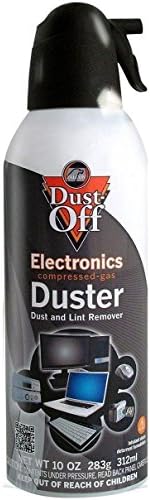


Some people know the can size they need. Others only know what gathered lint this week, so we sort both ways.
This size sits upright in a drawer or beside a monitor. It handles keys, intake vents and knurled dials without taking over the desk.
See the standard shelfPick what you need to clean and how often the dust piles up. We point to the right can size or kit.
Open the selectorThe rest of the line: cases sized for a workshop, and the cloths and fluid for the oily marks no blast of gas will lift.



We track our catalog by can sizes, pack counts, and the gear each duster is built to clean. The figures below show the full lineup.
listings across the four shelves
cans of gas in the line, counting every pack
of gas in the largest case we list
the lowest cost of an ounce of gas
We make one line of dusters so every can behaves the same way. The small can for a camera bag uses the same valve logic as the jumbo can on a workbench.
You will find plain specifications on our listings instead of vague adjectives. We show the exact volume and pack count on each card.
A blast of gas moves dry dust but leaves skin oils behind. We build microfiber cloths and small kits for the parts of the job a stream cannot finish.
Picking a duster comes down to what you clean, how often you clear it out, and what kind of grime is sitting on the surface.
| Can size | Listings | Cans in a pack | Best price an ounce |
|---|---|---|---|
| 3.5 oz | 2 | 1 to 2 | $2.79 |
| 5 oz | 1 | 1 | $5.63 |
| 7 oz | 4 | 2 to 12 | $0.79 |
| 10 oz | 5 | 1 to 12 | $0.30 |
| 12 oz | 4 | 1 to 12 | $0.42 |
| 17 oz | 2 | 1 to 2 | $1.12 |

This is the classic can that sits on a desk corner or in a shallow drawer. It fits the palm naturally and clears away crumbs beneath keycaps, grit in sliding rails, and gray lint from intake vents. You can pick it up as a single unit or in a multipack for steady bench work.
★★★★☆4.5 from 6,954 ratings
$8.97$0.30 an ounce of gas
These basic habits apply to every duster we produce in Branchburg. Keep them in mind whenever you pick up a can.
Our dusters carry a bitterant, added to discourage inhalant abuse, and the listings for them are age restricted at the point of sale. Read the can before you use it: the label is the instruction, and this site is not a substitute for it.
We have made one line of dusters in the same Branchburg, New Jersey plant for decades. Our can sizes follow how often people clean their gear, from a small bag can up to full cases. We added cloths and wipes because a stream of gas cannot lift skin oils or smudge marks. Every figure and count sits plainly beside the can on its shelf.
Start from the gear on your bench and how often the dust gathers. A keyboard needs a quick clearing every few weeks, while an open fan grille or a sewing bobbin case takes longer bursts to push out gray felt. Those habits settle which can size fits your shelf.
Someone clearing crumbs out of one home keyboard needs a single standard can and a cloth for the screen glass. Someone stocking six lab benches or a camera rental locker will want cases ready in a cabinet. Our four shelves separate those jobs so you find the right pack without hunting.
| Shelf | Listings | Can sizes | Price |
|---|---|---|---|
| Ten ounce cans | 5 | 10 oz | from $4.50 |
| Small cans | 7 | 3.5, 5, 7 oz | from $16.94 |
| Big cans and cases | 6 | 12, 17 oz | from $23.99 |
| Screen care | 7 | no gas, cloths and kits | from $4.87 |
| What is dusty | Listings | Shelves it draws from |
|---|---|---|
| Keyboards and laptops | 15 | Ten ounce cans, Small cans, Screen care |
| Desktops and fans | 11 | Ten ounce cans, Big cans and cases |
| Cameras and lenses | 9 | Small cans, Screen care |
| Screens and displays | 6 | Screen care |
| Craft and hobby benches | 18 | Ten ounce cans, Small cans, Big cans and cases |
Look at what is dirty before picking a can size. The gear pages sort our cans and cloths by keyboards, camera barrels, intake grilles, glass screens, and craft tables so you only take what the task asks for.
If you already clear benches weekly, a full case of standard cans keeps the closet ready. Add a pack of microfiber cloths or a screen shammy for the glass, since the gas lifts dry grit but leaves skin oils behind.
The can holds a liquefied gas kept under pressure. When you press the trigger, the liquid boils off inside the top of the can and leaves the nozzle as a dry, steady stream that moves loose grit.
As the liquid boils into gas, it pulls heat from the metal walls. The can grows cold and the stream weakens during long sprays. Let the can sit for a short spell to warm back up to room temperature.
No. The stream moves dry dust, bread crumbs, and loose lint. Fingerprints and oily streaks need contact, so use our microfiber cloth, screen shammy, or a moist wipe on the glass instead.
Slide the straw into the nozzle when grit sits deep in a keycap switch, between heat sink fins, or inside the knurled metal ring of a lens barrel where the wide stream scatters.
A single can handles months of clearing a laptop and a desktop fan. If you keep three workbenches clean, manage a classroom lab, or run a repair bench daily, a case belongs in your supply closet.
We wrote short guides on snapping the trigger tab, holding the can upright, fitting the straw into seams, and knowing when a cloth does what the gas cannot.
A can tipped past a certain angle stops spraying gas and starts spraying cold liquid. Here is what is going on inside the tin and how to work around it.
A new can whose trigger will not budge is not a faulty can. There is a small plastic lock fitted at the plant, and it has to come off first.
It is not air, and the difference explains the cold tin, the fading stream and why the can never feels empty when it is.
The crumbs under the key switches blew right out onto the desk pad. I wiped the key tops with a shammy and swept the grit into the trash bin.
Marcus T., home office deskWe keep two cases in the back cabinet for ten student soldering stations. The long straws get between the component legs without touching the hot boards.
Elena R., electronics labA small can sits in my shoulder bag. It knocks fine beach sand out of the zoom barrel seams before I put the camera back into its padded case.
David K., field photography kitOur team reads notes, questions, and letters about our dusters and screen kits at our plant desk. We make the line here and answer practical questions about using the cans on your gear.
Falcon Safety Products
25 ImClone Drive, Branchburg, NJ 08876
No counter stands at that address and nothing is on display there. Letters and questions reach us; a can sent back to it will not.
The full line of dusters, screen cloths, and cleaning kits stands together in one place. You will find the same cans and multipacks we make here, kept ready for your bench.
Check our four shelves or look through our gear pages to match your keyboard, camera lens, or workbench with the right can size.